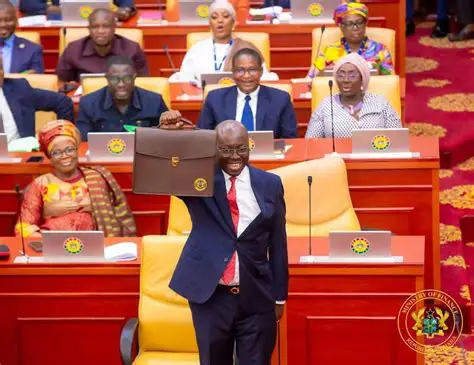
Although expenditure remained below programmed levels in the first seven months of 2026, capital investment fell short of its target, while compensation of public sector employees continued to absorb a significant share of domestic revenue.
The pressure is expected to intensify in 2027 following an agreement between government and organised labour for an 8% increase in base pay and an additional one percentage point for conditions of service.
For January to July 2026, total revenue and grants amounted to GH¢144.57 billion, marginally below the GH¢144.95 billion target.
Government expenditure, including net lending, stood at GH¢147.08 billion, against a programmed GH¢175.93 billion. This represents a 16.4% shortfall against the spending target.
However, the lower spending has also drawn attention to the pace of public investment and whether fiscal consolidation is creating enough room for infrastructure development and job creation.
Capital investment under scrutiny
Capital expenditure remains a key test of how government intends to balance fiscal discipline with its development priorities.
Government spent GH¢24.23 billion on capital projects in the first seven months of 2026, about 25% below the programmed target.
Although this represented a 157.9% increase compared with the same period in 2025, the shortfall against the budget allocation raises questions about the pace of infrastructure delivery and investment in productive capacity.
The Director of the Institute of Statistical, Social and Economic Research (ISSER), Professor Robert Darko Osei, says government must ensure that macroeconomic stability translates into tangible improvements in living conditions.
“But the type of growth also matters. And if you realise from some of the comments that came up, is it the type of growth that will result in jobs, right? So making the right investments in a way that ensures that the stability that we’ve observed truly translates into improvements in the daily living of individuals,” Professor Robert Darko Osei said.
His comments underscore the importance of ensuring that fiscal consolidation does not come at the expense of investments that can support employment and improve household welfare.
Wage commitments add to spending pressures
The public sector wage bill is another major consideration for the 2027 Budget.
Compensation of employees amounted to GH¢50.55 billion between January and July 2026, equivalent to 35.2% of domestic revenue mobilised over the period.
The figure comes ahead of the implementation of the latest public sector wage agreement, which provides for an 8% increase in base pay and an additional one percentage point for conditions of service in 2027.
While the agreement offers public sector workers an increase in earnings, it also adds to recurrent spending commitments and puts the focus on how government will manage the wage bill without squeezing other priorities.
Tax analyst Francis Timore Boi cautions that repeated labour agitations resulting in government concessions could make expenditure management more difficult.
“We’ve seen government’s swift response in terms of the labour agitation. But then if a repeat labour strike results in concession with government, it’s likely to create the impression that industrial action is the only way labour can get their means resolved. And that is likely to create more pressure for government in terms of the fiscal discipline,” Francis Timore Boi said.
Can domestic revenue support spending ambitions?
Revenue mobilisation will also be central to the 2027 Budget debate.
With government signalling its commitment to easing the tax burden on businesses and households, attention is shifting towards improving compliance, widening the tax base and addressing revenue leakages.
The challenge is whether these measures can generate enough revenue to support rising recurrent expenditure while preserving funding for capital projects.
Mr Boi argues that government should also explore ways of attracting private capital into major infrastructure projects to reduce reliance on public funds.
“Obviously, the budget needs to outline how private investments are welcomed in terms of some of the major projects. I’ve had some discussion with some people who say that, look, why can’t governments offload some of their road projects to private companies?,” Francis Timore Boi added.
Private-sector participation could provide an alternative source of financing for infrastructure, although the terms, risks and potential fiscal obligations of such arrangements would need careful consideration.
The 2027 Budget is expected to provide a clearer picture of how government intends to manage its wage commitments, finance infrastructure investment and strengthen domestic revenue mobilisation while maintaining the fiscal gains recorded in 2026.
Leave a Comment
No comments yet. Be the first to comment!