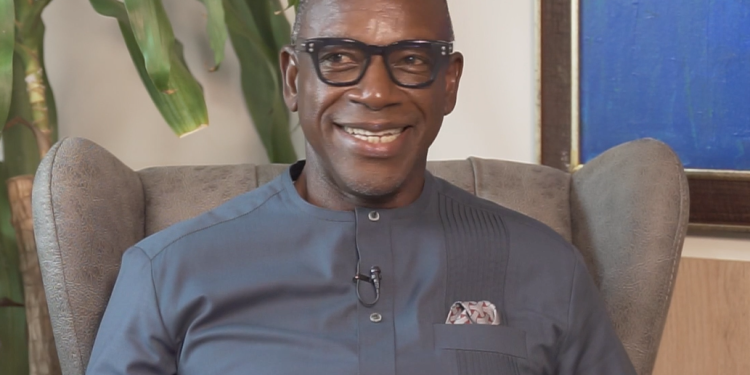
He said the bank’s contributions were guided by its founding purpose of supporting Ghana’s socio-economic development and transforming lives.
Speaking in an interview on Monday, November 9, 2026, Mr Effah said Fidelity Bank had financed five power projects, serving as the lead bank for the transactions and arranging syndicated facilities.
“We have financed more power than any other bank or maybe even the rest of the banking sector put together. We finance five power projects,” he said.
He said the bank had also supported the housing sector by financing developments such as Manet Village, Manet Cottage on the Spintex Road and Villagio Vista, for which it served as the lead bank.
Mr Effah added that Fidelity Bank had rolled out mortgage products to enable people to acquire homes and pay for them over time.
Beyond infrastructure financing, he said the bank pioneered agency banking in Ghana in 2012, a model that allows customers to access basic banking services through agents operating from locations such as pharmacies and small shops.
He added that the initiative had expanded to about 7,000 agents across the country, helping the bank reach communities where establishing conventional branches may not be viable.
“We started agency banking in about 2012, and today we have 7,000 agents across the country,” he said.
According to Mr Effah, the agents provide important access points for customers who live far from traditional bank branches.
He said the bank had taken its development role seriously, particularly because of its position as one of Ghana’s biggest locally owned banks.
“When we set up Fidelity, we set out clearly that we wanted to have a purpose, and that purpose was to contribute towards Ghana’s socio-economic development, to inspire and transform lives,” he added.
Leave a Comment
No comments yet. Be the first to comment!