
GHRadio1
Real Music Power
GHRadio1
Real Music Power
Share this article
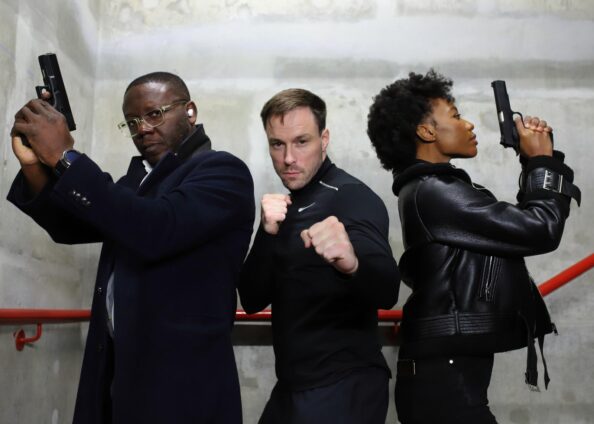
Ghanaian filmmaker Ben Darkwa says his new crime thriller, UNDERWORLD, was intentionally crafted to push African storytelling into a global space, as the film begins to gain traction on major international streaming platforms.
Speaking about the project, Darkwa — who wrote, produced and starred in the film — said the team set out to create a story that felt global in scope while remaining grounded in African identity.
“We wanted to create something that feels global in scale but still rooted in who we are,” he said, noting that African stories should not be confined to local settings. “This is an African story, but it’s not confined — it moves, it travels, and it competes.”
UNDERWORLD, which is currently streaming in the UK and US on Amazon, Apple TV and Fandango, follows Ghanaian operatives Kojo and Nairobi as they work in London to dismantle a criminal network tied to Ghana.
Their presence in the UK attracts hostility, and as they track a shadowy figure known only as “Marco,” they soon become targets themselves.
Darkwa explained that the decision to set the film in London was deliberate, reflecting the cross-border nature of modern crime and the evolving direction of African cinema.
“Our stories don’t only happen at home. They exist everywhere, and that’s what UNDERWORLD represents — Africans navigating systems that weren’t built for them,” he said.
Industry watchers say the film stands out for its ambition and cinematic style, placing African leads at the centre of a London-based crime narrative.
The approach, they say, reflects a broader shift in African filmmaking, with more producers aiming for global audiences and platforms.
Since its release, UNDERWORLD has begun attracting international attention for its fast-paced action, layered plot and unpredictable twists. Its availability on multiple platforms has further boosted interest, with discussions already emerging about whether it could expand to additional markets.
There is also growing speculation about a potential appearance on Netflix Africa, where demand for high-quality African thrillers continues to rise.
For Darkwa, the ultimate goal is resonance — both at home and across borders.
“At the end of the day, it’s about impact,” he said.
“If people can watch it anywhere and feel something, then we’ve done our job.”
Source: MyJoyOnline