The Mallam Interchange is one of Accra's busiest transport corridors, carrying thousands of commuters and heavy-duty vehicles every day.
But beneath the constant flow of traffic, signs of deterioration on sections of the interchange are raising concerns about public safety.
From a distance, the Mallam Interchange appears to be serving its purpose, but a closer look tells a different story.
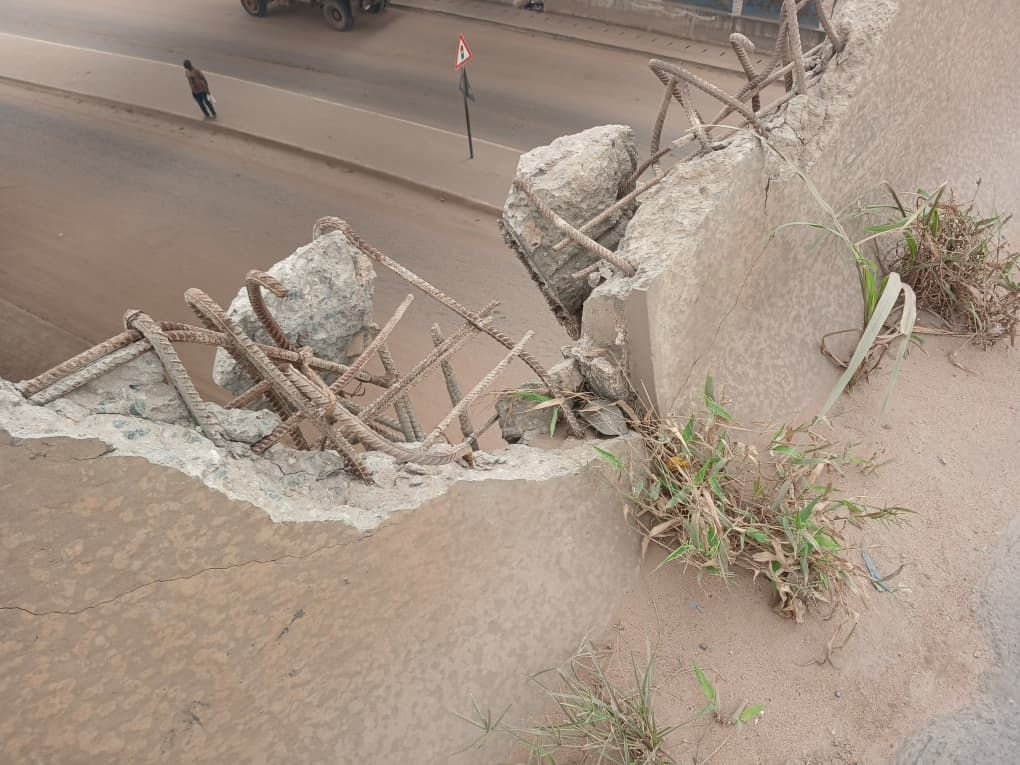
At the edge of the flyover, sections of the concrete parapet have broken away, exposing the reinforcing steel to the elements.
Cracks are visible in parts of the structure, while loose concrete hangs above the road. Residents and regular users say these defects have existed for some time, yet little appears to have changed.
“We sell building materials here, and around October a vehicle crashed into our shop and damaged some of our goods. If that loose concrete falls on someone, it could cause a serious accident." One driver explained.”
A trader who uses the routes everyday also mentioned, “It's very dangerous. If a vehicle accidentally drives into that section, the consequences could be fatal. We are appealing to the authorities to come and fix it."
Just beneath the interchange lies another problem. The drainage channel, intended to carry excess water away when it rains, is silted and clogged with refuse.
According to residents, the blocked drain contributes to flooding in the area, disrupting movement and affecting nearby homes and businesses.
"All the drains are choked. Whenever it rains, the whole area gets flooded, but no one has come to address the problem."
Back on the road, traders and commuters face yet another daily reality. As vehicles pass through the corridor, clouds of dust rise into the air, adding to the challenges.
"The dust is seriously affecting us. The contractor started work on the road, but after that it was left untarred. Since then, we've been living with dust every day," Albert, a vulcaniser, noted.
Following concerns raised by residents and commuters, TV3 contacted the Ghana Highways Authority.
However, attempts to get them to react to the issue proved unsuccessful.
For many who live and work around the interchange, addressing the visible cracks should be the priority, but maintaining the entire environment around the interchange is essential to ensuring safety, mobility and healthier living conditions for everyone who depends on it.
Residents raise alarm over signs of deterioration on sections of the Mallam interchange
NEWS
•
•
6 views
4 hours ago
3News


Discussion
0 commentsJoin the conversation
No comments yet. Be the first to share your thoughts!