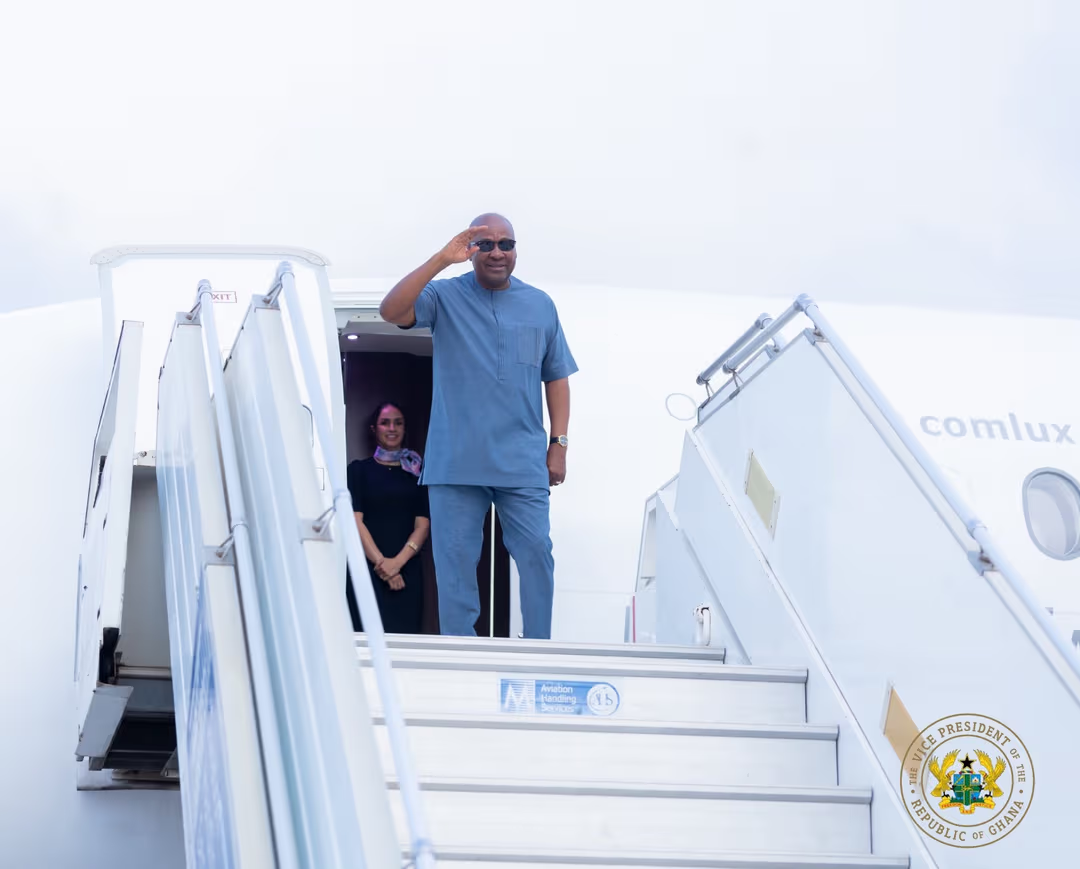
The Minister for Tourism, Culture and Creative Arts, Abla Dzifa Gomashie, has declared Wednesdays as national Fugu day.
This is contained in a statement dated February 10.
“On behalf of the Government and the good people of Ghana, and in furtherance of our collective commitment to preserve, promote, and celebrate Ghana’s rich cultural heritage, the Ministry of Tourism, Culture and Creative Arts wishes to inform the general public of Government’s decision to encourage all Ghanaians, as well as friends of Ghana, home and abroad, to dedicate every Wednesday to the wearing of Fugu (Batakari), in all its diverse forms, designs, and expressions, complemented by its distinctive and beautiful accessories,” a portion of the statement signed by the Minister reads.
She explained that, “This initiative is intended to deepen national cultural awareness, affirm our identity, and project Ghana’s heritage with pride to the world.
Madam Gomashie said, “Beyond its cultural significance, the initiative is expected to generate far-reaching social and economic benefits, including the empowerment of local weavers, designers, artisans, and traders across the value chain, as well as expanded business, employment, and commercial opportunities nationwide.”
“The government hopes that this collective embrace of Fugu will strengthen national unity, stimulate the creative economy, and serve as a powerful symbol of Ghana’s cultural confidence and self-expression,” she noted.
This comes on the back of recent social media buzz generated after some Zambian Netizens mocked President Mahama for wearing a smock, which they described as a blouse, on a three-day state visit to the southern African country.
In response, President Mahama said by choosing to wear smock or fugu to Zambia, he has created a market avenue for the weavers in Ghana.
He said this on the back of the social media buzz generated by his arrival in Zambia wearing smock.
Speaking with journalists on the sidelines of the 3-day state visit to Zambia on February 6, President Mahama used the opportunity to explain his choice of dressing.
“It’s called the smock in English, but in our language some people call it fugu, some call it batakari. Yeah, now this is a traditional dress that is made by a local industry, it’s part of our culture and so in the past it was worn by kings, royalty and also warriors. When our warriors were going to war, they wore smocks and the belief was that the smocks were soaked in some herbs and then some spiritual thing was done, so when you fire a bullet it can’t penetrate, you know, and so the smock portrays a lot of things in our culture,” the President explained.
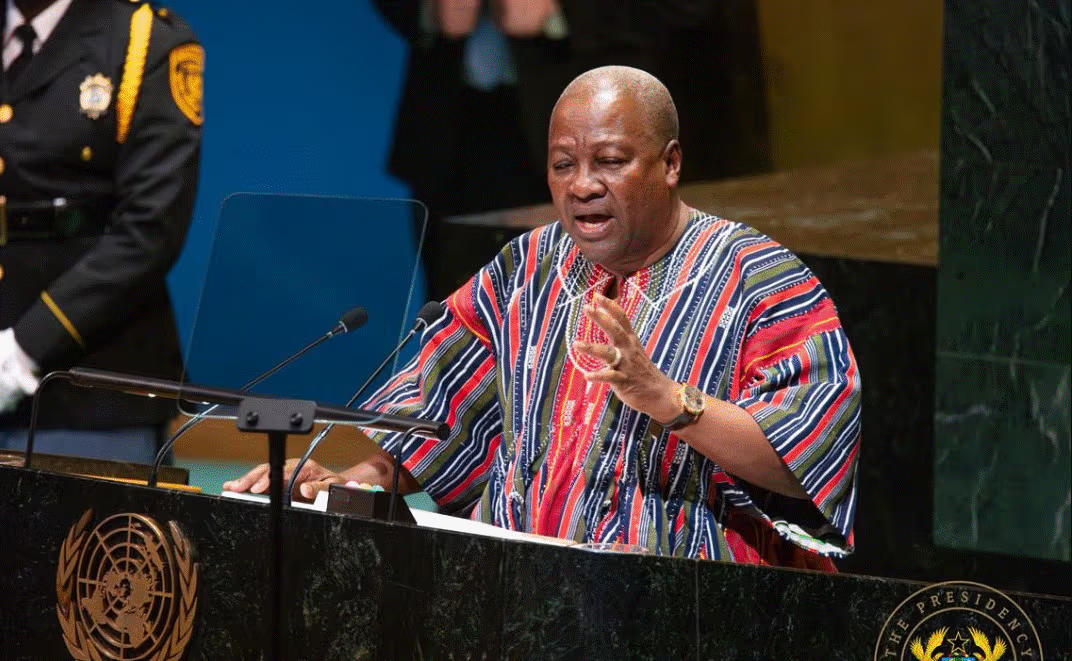
According to him, “and significantly on the day Ghana, the first sub-Saharan African country to gain independence, on the day our independence was declared, our president Kwame Nkrumah was wearing a smock, he and all the freedom fighters were wearing smocks, so smocks have become an integral part of our cultural identity and I wore the smock to the United Nations, the highest platform in this world.”
President Mahama expressed shock that Zambians do not know about the smock.
“I’m surprised that Zambians didn’t see me in a smock last September. When I gave the speech that everybody’s talking about, I was wearing a smock, I’m surprised that they didn’t notice it until I visited Zambia, but the smock weavers in Ghana will be very happy because I, by power of social media, have, you know, given them branding and marketing that they couldn’t ever have dreamed of ever getting, you know, and I’m sure that by the time I leave here the number of searches for fugu, batakari and smock, you know, is going to be quite high,” he stated.
Tracing the source of the brouhaha, President Mahama said, “…it was just because of an innocuous statement, you know, people were commenting about my arrival and one person said, oh, but what blouse is he wearing, that’s it, and it triggered a whole social media firestorm. But incidentally, you know what, when I arrived, we exchanged gifts, myself and President Hichilema, he gave me a beautiful carving, you know, Zambian carving, and I appreciate it very much, I’m going to put it in my office and label it as a gift from President Hichilema, and then I gave him a fugu, so what I wore, I gave him one of that, and so he said he’s going to order some more and then distribute it to his Zambian countrymen.
The President also touched on his intentional approach to promoting made in Ghana clothes.
“I wanted to promote the local garments industry, and so all my clothes are made in Ghana, they are sewn by Ghanaian designers, so all these safari suits and things I wear are sewn by local designers, and that’s what I wear every day, you know, to work, to official functions. And the thing is, I told President Hichilema, I can understand that you wear suits because your part of the continent is colder, our part is warmer than yours, and so we need to adapt to clothes that make us comfortable in the warmer weather,” he said.
Tourism Minister declares Wednesdays as National Fugu Day
NEWS
|
|
9 views
3 days ago
Comments
Leave a Comment
No comments yet. Be the first to comment!
3News