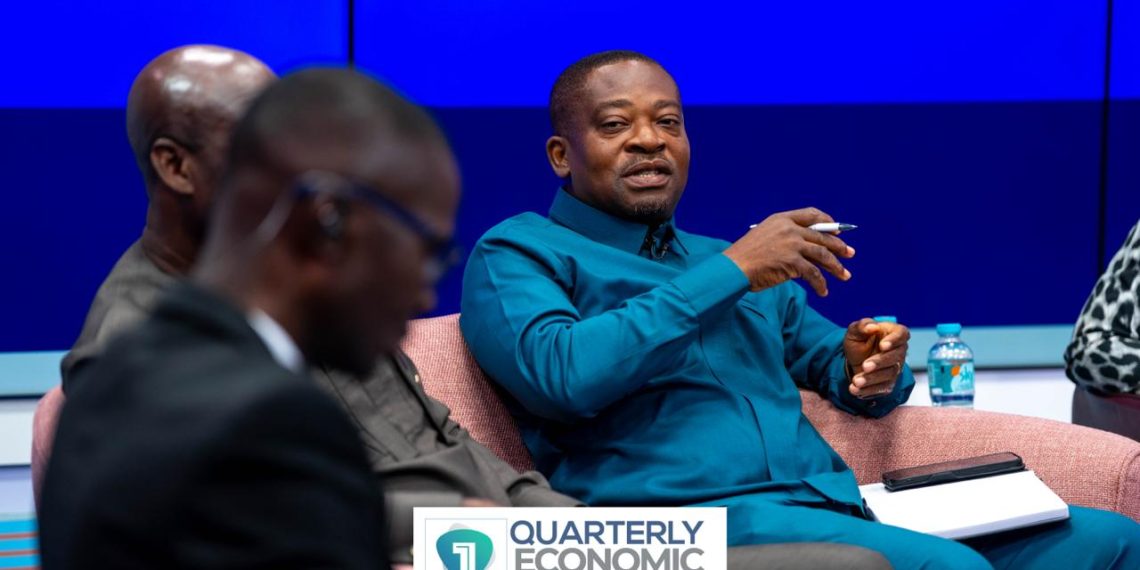
The Chief Executive Officer of the Association of Ghana Industries (AGI), Seth Twum-Akwaboah, has stated that the economic sacrifices accompanying Ghana’s recent macroeconomic stabilisation were necessary to restore investor confidence and reset the economy.
Reflecting on the country’s economic performance on Channel One TV’s Quarterly Economic Outlook on Monday, April 27, Mr Twum-Akwaboah said Ghana had previously faced a period of deep uncertainty that eroded business confidence and discouraged investment.
“As a country, we needed this stability critically. We were in crisis at some point. Confidence levels were very low, and people investing their own resources became an issue,” he said.
He explained that restoring stability required deliberate efforts to reduce speculation in the market, particularly around the currency.
“There was so much uncertainty in the system. People were converting cedis into dollars and hoarding them. You needed to take that speculation out so that real players could operate in the market,” he noted.
According to him, recent improvements in fiscal management, particularly the narrowing gap between government revenue and expenditure, indicate growing discipline in managing public finances.
“We are now seeing revenue and expenditure almost at par. It means there is some prudence in the management of resources, and that is very important,” he said.
However, Mr Twum-Akwaboah acknowledged that the stabilisation process has come with trade-offs, including reduced government spending and its ripple effects on economic activity.
“There must have been a cost, there’s no doubt about it,” he stated. “Government is not spending as much, and that has implications. Disposable income becomes a challenge, and people begin to feel there is no money in the system.”
He added that constrained public spending affects demand for goods and services, which in turn impacts businesses.
Despite these challenges, the AGI CEO maintained that the short-term pain is necessary to achieve long-term economic stability and sustainable growth.
Ghana’s economic stability came at a cost, but it was necessary – AGI
NEWS
•
•
5 views
2 hours ago
citinewsroom
More in NEWS
Deadly attack in Mali: Govt tells Ghanaian traders and drivers who ply the route to suspend their movements
Apr 27, 2026
Read more
Discussion
0 commentsJoin the conversation
No comments yet. Be the first to share your thoughts!