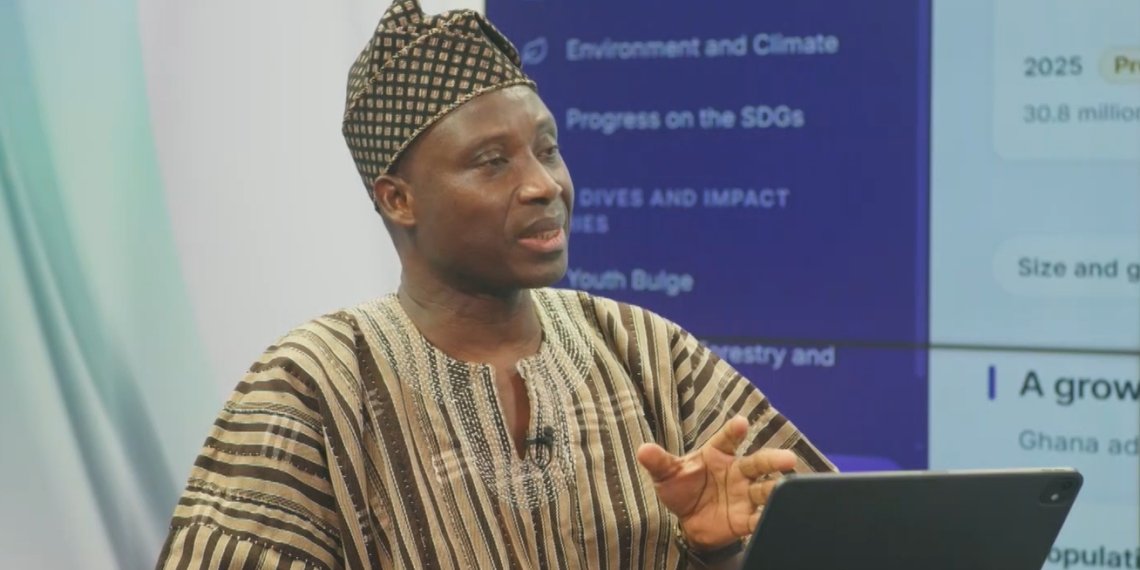
He explained that the country’s population currently stands at about 33.7 million, with an estimated 500,000 to 700,000 people added every year.
Speaking on Wednesday, November 4, Dr Iddrisu said the pace of population growth had slowed over the years, extending the period within which the population is expected to double.
“As we speak now, Ghana is home to about 33.7 million people, and the estimates show that every year, we add on about 500,000 to 700,000 people every year,” he said.
“When you do the mathematics, you will see that we are now looking at an annual population growth rate of 2.1 per cent. But it used to be higher. And so, because we are now looking at a 2.1 per cent growth rate, it will take about 33 years for the population to double.”
Dr Iddrisu explained that at a growth rate of 2.7 per cent, the population would have doubled in approximately 26 years, while a rate of 2.5 per cent would have resulted in a doubling period of about 28 years.
He said the changes reflected the country’s population growth trends between successive census periods, with the current rate of 2.1 per cent indicating that Ghana’s population would take about 33.3 years to double.
The Government Statistician also highlighted the country’s changing settlement patterns, noting that Ghana had experienced a steady shift from a predominantly rural population to an increasingly urban one.
He said that in 1984, about 68 per cent of the population lived in rural areas, while 32 per cent lived in urban communities.
By 2000, the proportion of the urban population had increased to 43 per cent, while the rural population declined to 56 per cent.
The trend continued in 2010, when the urban population surpassed the rural population for the first time, accounting for 50.9 per cent of the total population, compared with 49.1 per cent in rural areas.
According to Dr Iddrisu, the 2021 Population and Housing Census further showed that 56.7 per cent of Ghanaians lived in urban areas, while 43 per cent were in rural communities.
He said current projections indicate that approximately 60 per cent of Ghana’s 33.7 million people now live in urban areas.
Leave a Comment
No comments yet. Be the first to comment!