Cultural practices rooted in stigma and exclusion are denying Persons With Disabilities (PWDs) their basic human rights in Ghana, with the Ashanti Region identified as the most affected, according to a new report by the ABAK Foundation.
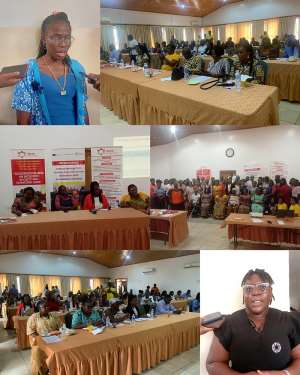
The report, presented at an advocacy workshop on September 1, 2025, at Miklin Hotel in Kumasi, reveals that PWDs, especially women in rural communities, are routinely hidden by families, barred from public spaces, and excluded from communal decision-making because of punitive traditional norms and the fear of stigmatization.
"In some communities, it's still taboo for a person with a disability to be seen near a chief's palace or to have a voice in communal matters," said Dorcas Dapaah, Project Officer at ABAK Foundation.
"Families hide their relatives not because they want to but because they fear what their culture will do to them."
The findings form part of a two-year European Union-funded initiative titled Strengthening Civil Society Representation of Women with Disabilities in Ghana, jointly implemented by ABAK Foundation and Sightsavers Ireland.
The study, which covered the Ashanti, Greater Accra, Bono, and Bono East regions, points to widespread challenges such as social exclusion, inaccessibility of public infrastructure, limited education opportunities, high unemployment, and restricted access to financial and social services.
Paulina Afognuo Agyei, a visually impaired advocate and Gender and Social Inclusion Officer at ABAK Foundation, stressed that PWDs are demanding fairness, not favors. "We're not asking for special treatment. We're asking for equal rights. It is not enough to pass laws. We need enforcement. We need buildings we can enter, jobs we can apply for, and policies that include us," she said, calling for government-backed vocational training and entrepreneurship programs tailored to the needs of women with disabilities.
The Foundation urged traditional authorities to lead efforts to dismantle discriminatory customs. "Culture evolves. If our customs are hurting people, then it's time to re-evaluate them," Ms. Dapaah said. "Traditional leaders must become allies in the fight for inclusion, not obstacles." She added that many PWDs possess talents that could significantly contribute to community development if given the opportunity.
The workshop in Kumasi also created a platform to build stronger alliances between disability rights groups, women's networks, and climate advocacy organizations, with discussions focusing on how disability rights can be integrated into wider development issues such as climate resilience, education, and economic empowerment.
Although the Ashanti Region emerged as the most affected, the report makes clear that discrimination against PWDs is a national challenge. The project aims to strengthen grassroots advocacy and ensure that disability rights are treated as fundamental human rights rather than optional considerations.
ABAK Foundation and its partners expressed optimism that with sustained advocacy and policy reform, entrenched cultural and systemic barriers can be dismantled, paving the way for an inclusive society that leaves no Ghanaian behind.
Ashanti Region tops regions with entrenched discrimination against PWDs
Social News
|
|
87 views
5 months ago
Comments
Leave a Comment
No comments yet. Be the first to comment!
ModernGhana