The National Plan of Action Phase 2 for the Elimination of the Worst Forms of Child Labour in Ghana (2017-2021) reports that 27% of children in the Volta Region are engaged in child labour, with 22% involved in hazardous forms of labour. However, these figures are believed to underestimate the true prevalence of the issue due to unsystematic data collection methods in the region.
Despite an advanced legal framework, such as the Children’s Act of 1998, implementation remains weak, failing to protect the rights of vulnerable children and ensure their access to education and development opportunities.
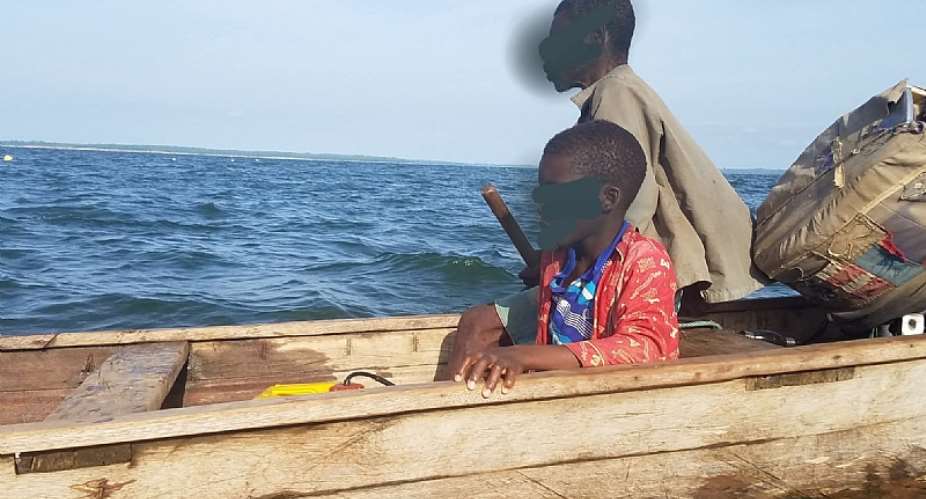
In the light of this, George Achibra, Founder and Executive Director of Partners in Community Development Programme (PACODEP), has warned that “Children are dying slowly,” as he calls for urgent, collective action to end child trafficking and child labour in Ghana. He said the menace, particularly in fishing and cocoa-growing areas, has become a national canker that continues to claim lives daily.
Mr. Achibra made the call during a day media workshop held in Dambai, the Oti Regional Capital, as part of the My Rights, My Future project, funded by the European Union and implemented by Right To Play in partnership with PACODEP and ACRAD. With a budget of €800,000, the project is targeted at curbing child exploitation in high-prevalence districts of the Oti and Volta regions.
Highlighting the brutal realities, Mr. Achibra described how trafficked children endure hazardous conditions, often with fatal consequences. Children are being trafficked and engaged in the cocoa forests and the fishing industry. “Some dive and go deeper into the waters and disappear. Others get tangled in nets. These children are dying slowly,” he said.
Achibra added that traffickers often lure families with false promises. “Perpetrators are clever and cunning. They offer sugar-coated words to exploit parents who are struggling to survive,” he explained.
According to him, beyond the physical risks of drowning and injury, children are exposed to polluted water bodies, waterborne diseases, and malnutrition. “Look at the colour of our waters today. Even if there were no nets, bilharzia and other waterborne diseases are slowly killing them,” he said.
Mr. Achibra cited figures from International Justice Mission (IJM) indicating that over 20,000 children are engaged in the fishing industry alone. He added that the true picture is likely much worse, given underreporting and lack of access to remote communities.
He explained that traffickers exploit poverty and parental ignorance, luring families with promises of education and work opportunities for their children as they sugar-coat their words and exploit parents who are struggling to survive.
According to Mr. Achibra, the role of the media is important in exposing hidden realities, shaping public perception, and compelling action. However, he cautioned that journalists cannot do this effectively without resources. “The media must be resourced. They need to travel to the lakes, to the farms, to the communities where these children are suffering. Without such support, the public will never get the true picture of what they go through,” he stressed.
He proposed the creation of a dedicated fund to support journalists and researchers who monitor child labour hotspots, arguing that resourced reporting would magnify the voices of affected children and increase accountability.
Adding to the call, Selasi Ahadzi, Communications Specialist at Right To Play, urged parents to take deliberate steps to protect their children from exploitation. “Be more intentional about the children you have. When people come and say they are taking your child somewhere, ask yourself: Where are they actually taking him? What will he be doing? If we don’t become intentional, this issue will keep happening,” he advised.
Mr. Ahadzi explained that while policies and frameworks exist, prevention starts at home, with parents asking critical questions before releasing children into others’ care. “If we all come together—every day Ghanaians, the media, development partners—and decide that this is something we want to address, then we will see the outcomes we want,” he added.
For Bagonluri Kibuka, Project Manager of My Rights, My Future, poverty remains the single greatest cause of child labour as “Most parents use their children on the lakes or in cocoa farms to get out of poverty. While we are making inroads through education and sensitisation, much more needs to be done.”
He explained that children rescued through the project are either returned to school or, if above school age, linked to training opportunities. He added that community-based organisations are being empowered to sustain these interventions at the grassroots level.
Mr. Kibuka emphasised that progress has been made through collaboration with law enforcement, the judiciary, and social welfare officials. “Communities now know that once perpetrators are apprehended, the law will take its course. Punitive measures are part of the process,” he said.
Speakers at the workshop also raised concerns about inadequate government allocations for child protection, education, and safeguarding. They argued that while Ghana has ratified the UN Convention on the Rights of the Child and enacted protective laws such as the Children’s Act, these gains risk being undermined without adequate financing and implementation.
“It is not just about writing policies into books. We need resources to make them work,” Mr. Achibra insisted, noting that underfunding leaves gaps exploited by traffickers.
Communities were urged to raise the red flag when strangers arrive with promises for children, and to support rescued children through reintegration.
According to Mr. Ahadzi, reintegration requires more than rescue—it demands dignity and opportunity. “It’s one thing to rescue children, but if you don’t connect them to opportunities to become better, then we’ve not done enough,” he said.
The project has also integrated play-based learning approaches to make reintegration smoother and help children adapt after rescue. According to Mr. Kibuka, such methods have proven effective in sustaining rescued children and giving them a sense of belonging. “We want the country as a whole to take children seriously,” he emphasised.
Mr. Achibra concluded by calling for a united national response. “Children are dying slowly. This is the time for all of us to put our hands on deck. Together we can protect our children so they can live, learn, and grow in safety and dignity,” he said.
Media, stakeholders urged to intensify fight against child trafficking
General News
|
|
67 views
5 months ago
Comments
Leave a Comment
No comments yet. Be the first to comment!
ModernGhana
More in General News
Mahama can’t appoint all NDC members at the same time, be patient – Asiedu Nketia tells party faithful
Feb 13, 2026
Read more
Highly inflammable goods stranded at Paga border due to limited hours of operations at Burkinabe side of Ghana-Burkina Faso border
Feb 11, 2026
Read more
Galamsey fight: About $48,000 is needed to reclaim single hectare of land; over 5,500 hectares to go – Lands Ministry Spokesperson
Feb 06, 2026
Read more