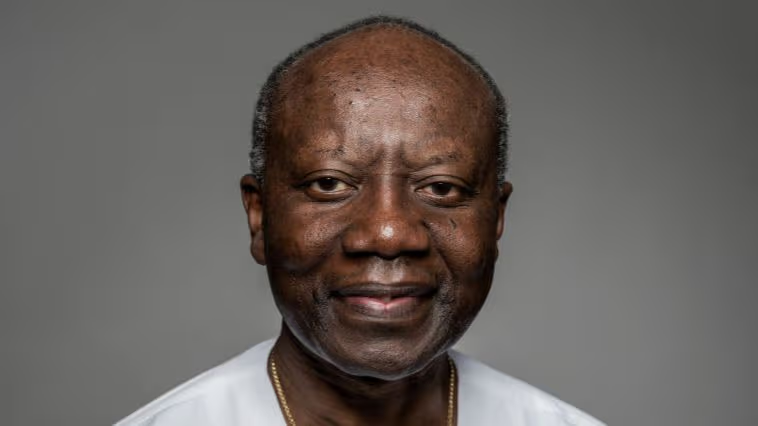
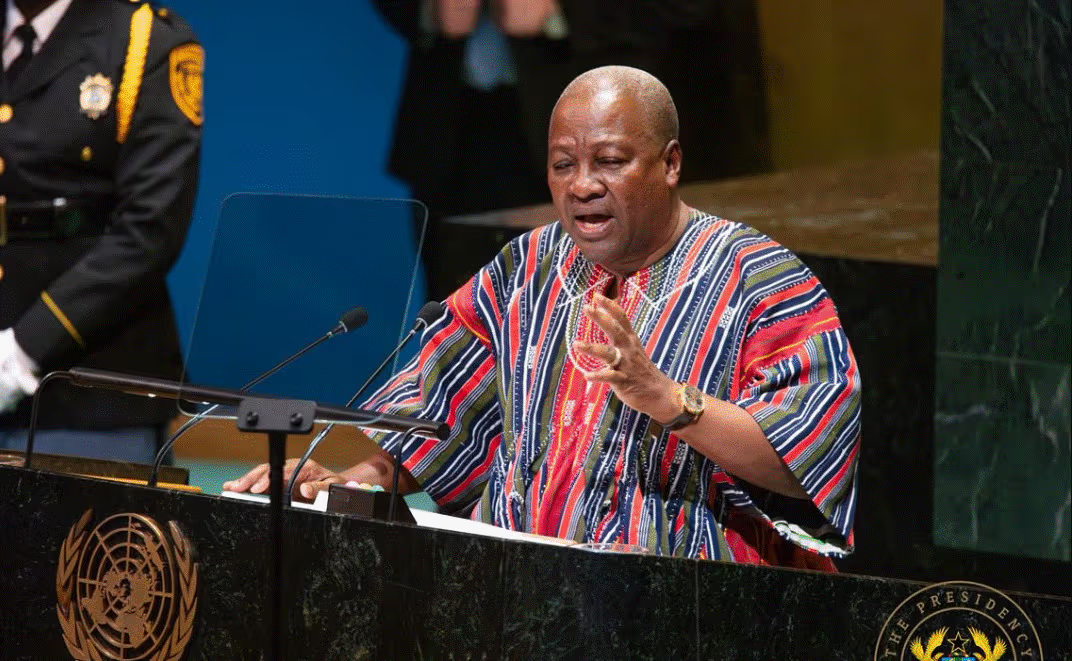
President John Dramani Mahama has congratulated the new Chief Justice of the Republic of Ghana, Justice Paul Baffoe-Bonnie.
President Mahama swore him into office on Monday, November 17.
In a post on his X page after the swearing-in exercise, President Mahama said “Remember, my Lord Chief Justice, that you stand at the intersection of law, history, and service. The expectations of our people are high, but so too is their hope.
“You must, therefore, lead with courage, even when decisions are difficult or unpopular; guard jealously the institutional integrity and independence of the Judiciary and always remember that every file on your desk and every case in your courts represent human lives, families, and futures.”
Justice Baffoe-Bonnie became acting Chief Justice in April after the suspension of Justice Gertrude Torkornoo, who is still litigating her removal as the head of the Judiciary.
Parliament, through a head count, approved his nomination as the Chief Justice of the Republic of Ghana on Thursday, November 13. 163 members of the Majority were counted, while the Minority recorded 69 members.
“I urge the nominee to take all that has been happening, from the nomination to the approval, into consideration in his tenure of office,” the Speaker, Alban Bagbin, said after the approval on Thursday.
Prior to the head count, the Minority Leader, Alexander Afenyo-Markin, had pushed for a secret ballot for the approval or otherwise. He argued that some members of the Majority had issues with Baffoe-Bonnie’s nomination and wanted to express their views in a secret ballot.
“We leave everything to posterity, everything we witness is for posterity…we are going to demand a secret ballot to vote on this [approval of Baffoe-Bonnie’s nomination]. We know there are members on their side who have their own views and want to express them when there is a secret ballot,” he said.
Afenyo-Markin further stated that the Minority could not support the nomination because the prima facie case against the former Chief Justice, Gertrude Torkornoo, remains unpublished by the government.
“As we speak, the prima facie case against Torkornoo hasn’t been published. The fact that the recommendation that gave rise to the president’s actions is not public is of concern to us…The fact that there appears to be some rights violations of Gertrude Torkornoo means we in the Minority are unable to support this nomination.”
For his part, the Member of Parliament for Asante Akim Central, Kwame Anyimadu-Antwi, told Parliament that the Minority opposed the nomination because there are seven separate cases in various courts, including the ECOWAS court, challenging the removal of the former Chief Justice. He wondered what would happen to Justice Baffoe-Bonnie’s approval if a ruling goes against the government.
Despite the controversy, the Chair of the Appointments Committee, Bernard Ahiafor, told the House on Thursday that Baffoe-Bonnie demonstrated deep knowledge of the law during his vetting.
“The nominee demonstrated outstanding competence, deep knowledge of the law, and a firm grasp of judicial ethics. He addressed questions posed by the committee with professionalism, clarity, and intellectual rigour. The nominee possesses the requisite qualifications.”
Justice Baffoe-Bonnie, who appeared before Parliament’s Appointments Committee on Monday, November 10, acknowledged the task ahead, which he described as “marked by public skepticism, institutional fatigue, and a growing demand for justice.”
He pledged that, subject to his endorsement, he would not merely preserve the Judiciary’s legacy but actively renew it. “The nation needs a judiciary that does not merely interpret the law but elevates the nation’s conscience,” he said, vowing to “restore confidence in our judiciary and leave it stronger than I found it.”
Justice Baffoe-Bonnie outlined a comprehensive strategy for judicial transformation anchored on three core pillars:
Procedural Clarity & Predictability: Establishing publishable rules and timelines for case management.
Efficiency & Accountability: Adopting technology, performance targets, and dashboards.
Open Justice: Implementing appropriate streaming, public summaries, and structured communication
.
He concluded his remarks by pledging to lead an era of greater transparency, efficiency, and accessibility, ensuring that access to justice “should not depend on who you are or your connections.”
Lead with courage, the expectations of Ghanaians are high – President Mahama tells Chief Justice Baffoe-Bonnie
NEWS
|
|
84 views
3 months ago

Comments
Leave a Comment
No comments yet. Be the first to comment!
3News