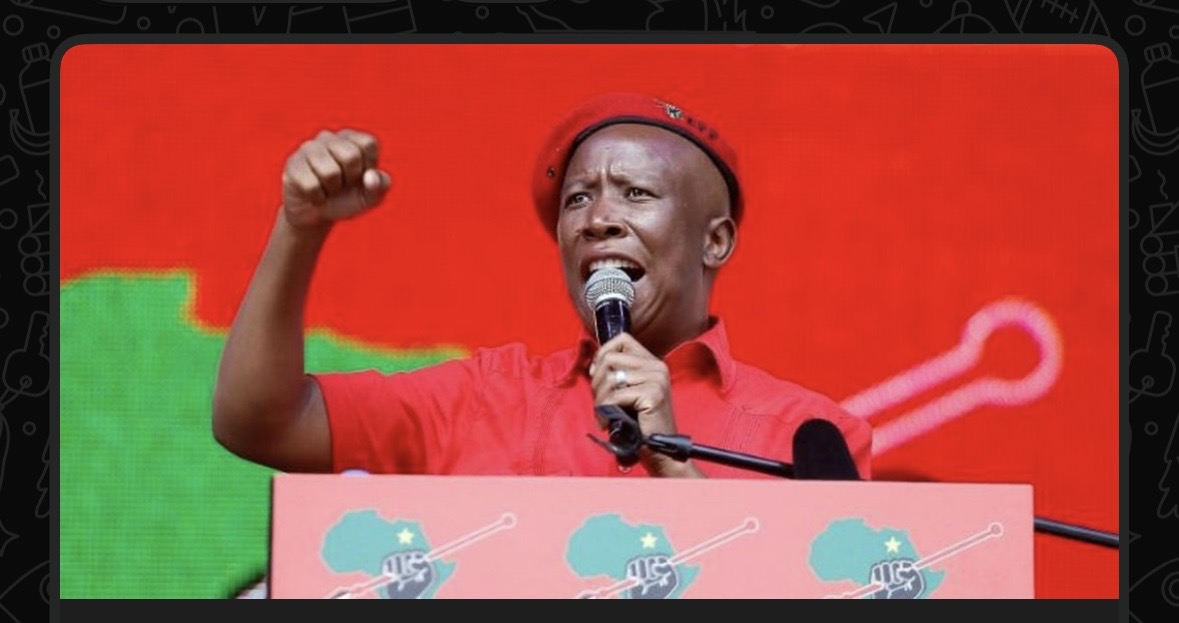
South African opposition leader Julius Malema has been sentenced to five years in prison for illegal firearm possession and public shooting, with his legal team filing an appeal. Julius Malema has been sentenced to five years in prison after being found guilty of unlawful possession of a firearm and discharging it in public.
According to a report by the BBC, Malema’s legal team has filed an appeal against the ruling in an effort to suspend his imprisonment while further legal processes continue. The sentence could also affect his position as a Member of Parliament.
He appeared at the East London court in a dark suit and red tie, showing little emotion as Magistrate Twanet Olivier delivered the judgment.
Malema was previously convicted on multiple charges, including illegal possession of a firearm and ammunition, firing a weapon in a public space and reckless endangerment. The case relates to a 2018 incident during the Economic Freedom Fighters (EFF) fifth anniversary celebrations in South Africa’s Eastern Cape, where video evidence showed him discharging a semi-automatic rifle into the air. In court, Malema maintained that he did not own the weapon and said the shots were fired as part of an attempt to energise supporters, however, Magistrate Olivier rejected this defence.
The court concluded that the actions amounted to a deliberate breach of firearm regulations during a political gathering. The case attracted large public attention, with supporters of the EFF gathering outside the courthouse during sentencing in solidarity.
Malema, leader of the EFF and one of South Africa’s most prominent political figures, previously served in the African National Congress youth wing before breaking away following internal political disputes and founding his own party.
After the ruling, he told supporters that “going to prison or death is a badge of honour,” adding: “We cannot be scared of prison [or] to die for the revolution. Whatever they want to do, they must know we will never retreat.” He has indicated plans to challenge the decision at South Africa’s Constitutional Court.
The prosecution originated from a complaint filed by Afrikaner lobby group AfriForum after footage of the incident circulated widely online.
Court slaps South Africa’s Julius Malema with 5-year jail term
Politics
|
|
7 views
7 hours ago
Comments
Leave a Comment
No comments yet. Be the first to comment!
Pulse News
More in Politics

Photos: Over 1000 delegates vote for NDC’s parliamentary candidate for March 3 Ayawaso East by-election
Feb 07, 2026
Read more
Let people win positions on their strength and not with your name – Bawumia told
Feb 03, 2026
Read more
NPP’s biggest hurdle is not unity but winning the love and trust of Ghanaians- Oppong Nkrumah
Feb 03, 2026
Read more