The implementation of political party manifestoes has become one of the major reasons Ghana is not getting the needed development it deserves. Despite being blessed with abundant natural resources and the human capital to match, Ghana continues to struggle because every political party that comes to power focuses narrowly on fulfilling its manifesto promises, often at the expense of continuity and sustainable national development.
Many citizens cast their votes in anticipation of the good policies outlined in political party manifestoes. Yet, in practice, this often derails or thwarts the effort of completing projects initiated by previous governments. It is common to see critical development projects abandoned immediately after a change in government, simply because the new administration wants to push its own agenda. The result is a pathetic spectacle of uncompleted projects scattered across the country, wasting away in the open while taxpayers bear the painful cost.
Examples abound. The Komenda Sugar Factory, launched with high hopes of reducing Ghana’s sugar import bill and creating thousands of jobs, remains idle years after its commissioning. The Saglemi Affordable Housing Project, which was supposed to provide shelter for ordinary Ghanaians, is now a decaying symbol of political neglect. The University of Environment and Sustainable Development in Somanya suffered major delays before seeing any progress. Even critical health facilities such as the Bank of Ghana Hospital and numerous district hospitals under the Agenda 111 initiative have seen stalled or delayed operations, leaving many communities underserved. These are just a few examples of the many uncompleted projects lying in ruins across the nation.
This troubling pattern raises serious questions about the mandate and effectiveness of the National Development Planning Commission (NDPC). Established to guide Ghana’s long-term development and ensure continuity across different governments, the NDPC has been too dormant for far too long. Its silence and lack of enforcement have allowed successive governments to prioritise partisan manifestoes over the broader national interest. If the Commission were more proactive and authoritative, it would be able to enforce a policy framework where governments are required to complete ongoing projects before embarking on new ones.
Instead of abandoning inherited projects to rot, incoming governments should be compelled to complete all uncompleted projects before initiating new ones. This approach will not only save taxpayers’ money but will also provide immediate employment opportunities for the teeming youth who are desperate for jobs. It will also foster trust in governance, showing citizens that their contributions are not wasted simply because of political transitions. More importantly, it will ensure that Ghana gets real value for its investments in development projects.
Civil society organisations, professional bodies, and concerned citizens must continue to demand accountability and push for a national policy on project continuity. If not, the vicious cycle of starting and abandoning projects will continue, leaving the nation poorer and more divided after every election cycle. As one civil society advocate aptly put it: “A nation that cannot complete its own projects cannot complete its own destiny. Ghana must learn that development is not about political parties, but about people.”
Ghanaians are watching!
FAB's Gist
Manifesto Politics and Ghana’s Stalled Development
Politics
|
By FRANCIS ANGBABORA BAALADONG
|
48 views
6 months ago

Comments
Leave a Comment
No comments yet. Be the first to comment!
More in Politics
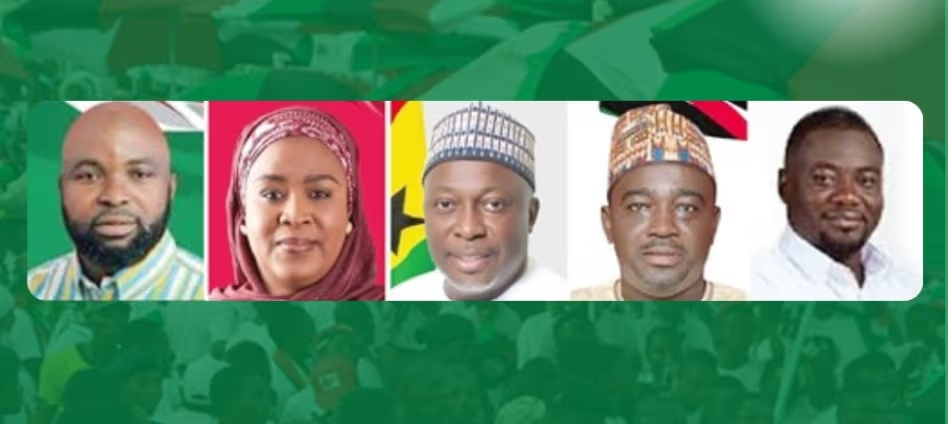
Photos: Over 1000 delegates vote for NDC’s parliamentary candidate for March 3 Ayawaso East by-election
Feb 07, 2026
Read more
Let people win positions on their strength and not with your name – Bawumia told
Feb 03, 2026
Read more
NPP’s biggest hurdle is not unity but winning the love and trust of Ghanaians- Oppong Nkrumah
Feb 03, 2026
Read more